 Vesna Scepanovic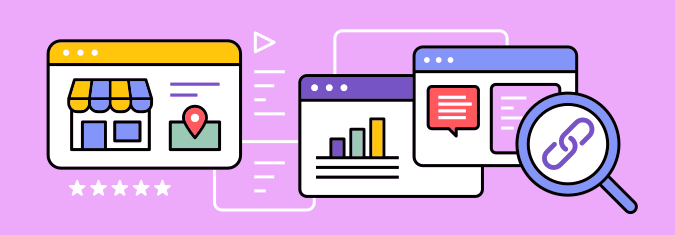
For many teams, Google Business Profile feels like the center of local SEO. The profile is complete, the information is accurate, reviews are coming in, and the listing shows up where it should. From the outside, it looks like the work is done.
Yet local visibility often stands still. Rankings don’t improve, coverage feels uneven across search results, or competitors with similar profiles seem to appear more often. In most cases, this isn’t caused by a poorly managed profile. It happens because SEO for local businesses extends past what a single listing can support.
Google Business Profile is one part of local discovery, but it represents only a portion of how your presence is evaluated. Search systems also rely on websites, third-party platforms, reviews, and consistent information across the web to understand how you operate and how reliable that information is.
At this point, local SEO activity often stays focused on maintenance. The profile looks complete, the basics are covered, and it’s not always clear what else affects local visibility once the listing is in place.
What Google Business Profile Covers Well
Google Business Profile helps connect you with nearby users by providing essential information in a visible and accessible format. In SEO for local businesses, it supports discovery by showing search systems where you’re located, how to contact you, when you’re open, and how customers interact with you.
Reviews, photos, categories, and updates add further context that supports local relevance. Together, these elements help establish your presence in map results and local packs, especially for searches with strong proximity intent.
This information covers the basics well. It confirms location, availability, and user interaction. What it doesn’t do is explain your services in depth or describe how you operate beyond those core details.
That distinction matters when local visibility depends on more than proximity alone.
What Local SEO Requires Outside the Listing
Google Business Profile covers key details, but it doesn’t describe everything search systems need to evaluate a local presence.
A profile confirms where you’re located and how users interact with you, but it doesn’t explain services in detail, show how those services vary by location, or provide deeper context about expertise and experience. That information usually lives elsewhere.
Search systems, including AI-driven search features, rely on websites, supporting content, and consistent information across the web to understand what you actually offer and how you fit into a local market. This includes service pages, location pages, third-party references, and signals that exist outside a single listing.
Where Local SEO Efforts Commonly Stop
Local SEO efforts often slow down once the visible pieces are in place. The business profile looks complete, the website exists, core listings appear accurate, and everything seems covered.
At that point, work tends to shift toward upkeep rather than expansion. Profiles are monitored, reviews are answered, and basic information is kept up to date. What often receives less attention is how services are explained across content, how locations are supported elsewhere, and how consistently the business is referenced across other sources.
This matters more as local discovery increasingly involves AI-driven results. When optimization stops at the profile level, there is less material for AI systems to draw from when generating summaries, recommendations, or comparisons. The business remains present, but it becomes harder to describe in detail in proximity-based results alone.
This is where SEO for local businesses can stall without a clear signal that something is missing. Visibility doesn’t drop sharply, but improvement becomes harder to achieve. Coverage varies by query, and performance depends more on proximity or brand familiarity than on how well the business is understood.
Looking Beyond Google Business Profile
Google Business Profile captures essential details, but local SEO is evaluated across more than one surface. Visibility depends on how business information is explained, supported, and reused across a business’s wider online presence. Those signals tend to come from a few key areas around the profile.
Look at How Services Are Explained on the Website
A website should explain what a business does without relying on the listing for context. Service pages and location content need to describe offerings clearly, show how they apply locally, and reflect actual experience. When this material is limited or generic, search and AI systems have little substance to draw from beyond basic facts.
Check How Consistent Business Information Is Across the Web
Business details appear in many places. Addresses, categories, and service descriptions are repeated across listings, directories, and third-party platforms. Differences between them don’t always stand out to users, but they affect how confidently information can be reused elsewhere.
Consider What Exists Outside Owned Assets
Local visibility is also shaped by external references. Reviews, mentions, and third-party coverage add perspective that a business can’t provide on its own. These signals help search and AI systems understand how a business is discussed and recognized outside its own website and profile.
For SEO for local businesses, these areas don’t compete with Google Business Profile. They fill in the context that a single listing can’t provide on its own.
Local SEO Works When the Full Picture Is Visible
Google Business Profile remains an important part of local SEO, but local visibility depends on how well business information holds together across multiple surfaces, not on the completeness of a single listing.
When services are clearly explained, business details are consistent, and external references reinforce the same understanding, SEO for local businesses becomes more sustainable and easier to interpret across search and AI-driven environments. That’s especially important as discovery increasingly relies on information pulled from more than one source at a time.
At Zlurad, our work with SEO for local businesses starts with how business information is interpreted and reused across search systems. From there, we support that understanding through technical SEO, content, and long-term strategy.
Seen this way, Google Business Profile isn’t something to optimize in isolation. It’s one signal among many that contribute to how local visibility takes shape.